Wednesday, July 17, 2019

Girls' Empowerment


Dawwie: Girls' Empowerment

So much has been happening in the past few weeks that I’m excited to share. I began working on a girls’ empowerment project called Dawwie, which in Arabic means “a loud voice with an impact.” This project is spearheaded by Egypt’s NCCM (National Council on Childhood and Motherhood), and UNICEF has been providing them with technical support by designing toolkits that can be used by facilitators to implement empowerment programs. Since the UNFPA works jointly with UNICEF on eliminating FGM, and this is an issue that is so closely tied to girls’ empowerment, we are also supporting the project. I have been tasked with helping to develop the toolkit, which includes programs such as Storytelling for Empowerment, Interactive Community Theater, Intergenerational Dialogue and Digital Literacy. 


Banner for the Dawwie program

I’m excited for this opportunity because it relates so closely to my previous job that I loved and that inspired me to pursue social work. For four years I ran an after-school young women’s leadership program with first and second generation immigrant adolescents in Queens, New York. This job allowed me the creative freedom to design curricula that appealed to young women and guided them in developing their voices, self-advocacy skills and leadership qualities. I facilitated the sessions, mentored the youth and got to see them grow into confident, empowered leaders, which made the job so fulfilling. Now with Dawwie, I have an opportunity to contribute this experience and knowledge to a national-level project. Having been on the direct-service side, I feel that I am able to keep the facilitators' and participants’ needs at the forefront as I design a programming toolkit that they can adapt to each of their specific circumstances. 

I am also learning about the similarities and differences between designing girls’ empowerment programs in Egypt’s cultural context and an American context. I am finding that there are so many similarities in terms of approach and content between the programming I did in Queens and what they are implementing in Egypt, more than I expected. I have the opportunity to really learn from experts here about how to be culturally-sensitive when working with the nuances of a different context. 

To briefly share a couple of other projects I’ve been working on over the past couple of weeks, I have been writing concept notes for two proposals:

- Advocating for the funding of more in-depth qualitative research on the social and behavior drivers of FGM in Egypt, particularly addressing the trend of medicalization in which doctors are increasingly conducting the procedure and therefore legitimizing it, despite nation-wide religous condemnations from Muslim and Christian leaders and the instensifying legal criminalization of FGM. 

- A Photovoice project in which girls from areas of Egypt with a high prevalence of FGM and other harmful practices are trained in photo-documenting their daily lives in order to develop their voices and critical consciousness, while providing first-hand insights into their lives for policy-makers to understand and consider when creating policies that impact them. 

Touring the country


In the meantime my intern buddies and I have been spending our weekends exploring the numerous historical sites of Cairo, including the churches of Coptic Cairo, the mosques of Old Cairo, and the Upper (Southern) Egyptian towns of Luxor and Aswan, where the most incredible monuments of Ancient Egypt remain! The history and beauty of the entire country has been unfolding before my eyes and leaving me in complete awe. We also went to a football match for the Africa Cup of Nations, which was an exhilarating and unforgettable experience of Egypt’s national pride. 


The Salah El-Din Citadel of Cairo and Muhammad Ali Pasha Mosque

Africa Cup of Nations Game at Cairo International Stadium: Egypt vs. Uganda
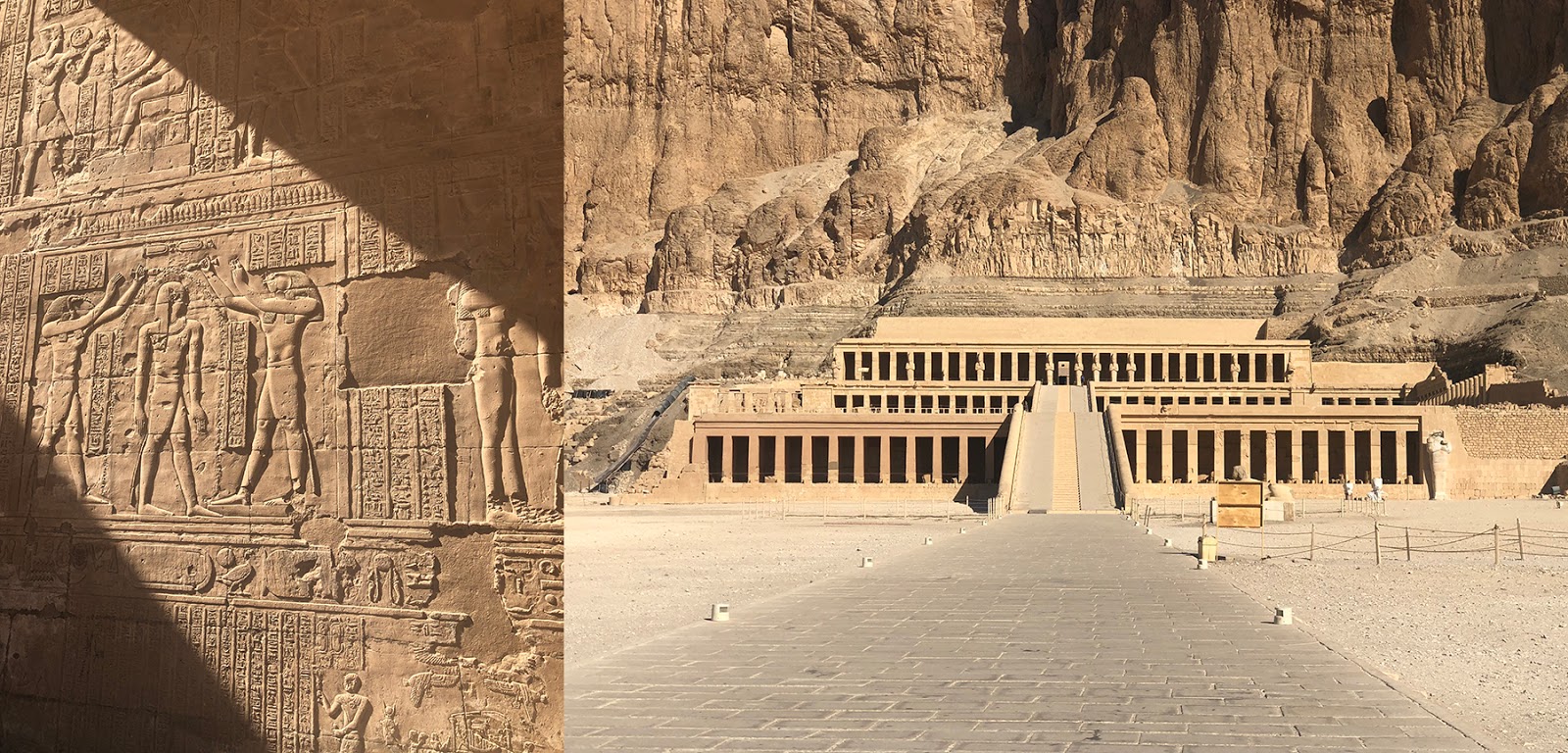

Temple of Horus in Aswan, Temple of Queen Hatshepsut in Luxor

This week I am off to spend a week with the Youth team at a training in the gorgeous Mediterranean city of Alexandria. I will share updates in the coming weeks. I am also at the halfway point of this summer experience, and want to give a shout-out to the United Nations Association of New York (UNA-NY) for its generous support of this opportunity. So far this internship has been an incredible experience that would not have been conceivable without the UNA-NY Summer Scholars program. 

Tuesday, June 18, 2019

Jumping right in!


Settling into my new home.

I’ve been in Cairo for almost three weeks, and I already feel at home. The extremely hot weather takes getting used to, but the people I’ve been meeting both in and out of work have made my experience amazing so far. I’ve been enjoying practicing my Arabic skills again and learning the Egyptian dialect little by little. Funny enough, I seem to blend in quite well because people keep assuming that I’m Egyptian…until I open my mouth. There's a lot of diversity in the way Egyptians look and many can look similar to South Asians, so it’s not so surprising. Maybe soon I will have enough language skills to pass as Egyptian beyond just how I look!

In terms of work, the first week was slow because it fell on the Eid-ul-Fitr holiday that marks the end of Ramadan (month of fasting). Many people leave Cairo during this holiday to enjoy the Mediterranean beaches along the north coast, while a fellow intern and I made a shorter trip east to Ain Sokhna along the Red Sea coast. It was quite an adventure getting out there because the area is still developing and a bit desolate, but the stunning blue waters and soft waves were worth it! We experienced a sandstorm on our first day, but after that the weather was perfect. It was a relaxing way to kick off this three-month adventure.

My first UN conference!

I served as a facilitator and note-taker during working group sessions.

Upon returning to work, the UNFPA Egypt Country Office was ready to kick into high gear, hosting a major conference called the “2019 Annual Consultation for UNFPA-UNICEF Joint Programme for the Eliminiation of Female Genital Mutilation (FGM).” It was an incredible opportunity right off the bat for me to get exposed to the inner workings of this enormous organization. Representatives from UNFPA and UNICEF across several Arab and African nations, as well as Indonesia, convened to learn about the evaluation results of phases I and II of the global joint programme and strategize for the third and final phase. It was so exciting and humbling to meet people who have been working so hard to empower communities to eliminate FGM.

I got to speak to and learn from so many amazing people.

What is FGM?

Female genital mutilation (FGM), also sometimes referred to as female genital cutting (FGC), is a practice in which parts of a girl’s external genitalia are removed. It's prevalent in certain Arab, African and Asian countries and dates back as far as Pharaonic times, in Egypt's case. Across cultures and eras there have been many justifications for it, from using it to mark a girl's transition to womanhood, to believing that it will reduce sexual libido, thereby maintaining women's "purity" and preventing adultery. However the reality for many girls and women who undergo this procedure is that it can be extremely physically and emotionally traumatic and cause both short and long term health risks, such as hemorrhaging, painful intercourse, childbirth complications and even death. It is classified as a “harmful traditional practice” by the UN, and since the UN Population Fund (UNFPA) focuses on the well-being of women, children, youth, this issue is a major focus of their work. 

Me with my lovely co-workers and fellow intern 

What is the Joint Programme?

The Joint Programme is a partnership between UNFPA and UNICEF to eradicate FGM from the societies in which it's still prevalent. One of my first assignments was to read and summarize the latest evaluations on the program's progress, including country profiles detailing milestones such as passing laws that ban FGM, empowering religious leaders and whole communities to make public declarations against the practice, and providing educational, legal and healthcare services to both survivors and those at risk. As upsetting as it can be to read about this issue, it was also heartening to see how much progress is being made. In some countries FGM practices have declined significantly, while others have progressed more slowly. Many communities want to end the practice, however because FGM is a symptom of such deeply-entrenched and complex social norms, it can be a very difficult and slow process. Therefore the Joint Programme's approach must be long-term, culturally sensitive, and community-based.

Dr. Maya Morsey's opening remarks

A social work perspective.

As a social work student, I am constantly striving to remember the individuals at the center of the matter. When working at the policy level it can be easy to forget about them in midst of so many theories and statistics. However it was encouraging to see the emphasis throughout the conference on person-centered interventions. For example, Dr. Maya Morsey, President of the Egypt's National Council for Women, spoke at length in her opening remarks about the need for policy-makers to listen to people rather than assume they know what is best for them. In the past, the UN was sometimes known for its imposing approach to making change, and that savior mentality continues to be a concern for any human service organization, but at this conference I could at least see the effort to become allies to people already fighting for their rights on the ground, rather than trying to speak for them.

View from the conference hotel: Sunset along the Nile

Three presentations at the conference really stood out to me because of their person-centered approaches. The first was about a community program that facilitates intergenerational communication, which in the context of FGM means empowering young people to express their differing views on the practice with their elders. Another presentation explained the Behavioral Drivers Model and how it can be sensitively applied in order to encourage a shift in social and behavioral norms, first by thoroughly researching and learning from communities about their needs and assets, and then designing interventions aligned with these findings. The third was interactive theater presented by Noon Creative Enterprise. They use humor and relatability to broach the sensitive topic of FGM within Egyptian communities, and so it was great for them to show UN representatives some of their work.

Entertainment on the Nile cruise and vibrant boats called Feluccas nearby

The conference ended on June 14th, which is the International Day of Zero Tolerance for FGM. Everyone celebrated with a beautiful dinner cruise on the Nile, which was so much fun. There's another conference with the African Union next week on FGM as well, so there's a lot of momentum and I'm excited to continue learning and supporting these efforts.